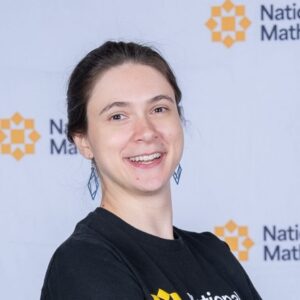
I recently had a chance to meet Ilana Walder-Biesanz, the Founder and CEO of National Math Stars. She is on a mission to identify and support the mathematical abilities of extraordinary young students. It’s an interesting model and not something I normally think about. Ilana agreed to an interview explaining the program and what they hope to accomplish. What follows is a lightly edited transcript of our conversation.
 Chad Aldeman: In your own words, what is the mission behind National Math Stars?
Ilana Walder-Biesanz: National Math Stars aims to find and support mathematically extraordinary kids to make sure that they have all the resources they need to be on track to reach the frontiers of math and science.
Chad: From a school’s perspective, how does the program work?
Ilana: There are two different ways schools could potentially work with us. One is helping us find kids, and one is collaborating with us once we have kids who attend their school who are in the program.
On the first side of things, we run what we call a Math Awards program. We work with schools, districts, or state education agencies to find young kids around third grade who are already significantly outperforming mathematically, and we provide awards for the schools to give out to those kids.
The kids get medals. They’re very happy. They cry. They put videos up on TikTok. Along with the medals, a letter goes home to their parents, telling them that their child is probably ready for a lot more. The letter gives them resources they can use immediately, and it also invites them to apply to a longer-term wraparound support program.
Then we run an admissions process to take kids into that long-term program, and we call kids who are accepted “Stars.” A lot of what we do with those kids takes place outside of the school day. We help them find enrichment opportunities, summer camps, or advanced courses outside of school. We also sometimes work with schools to enable acceleration or accommodations within the school day for those kids.
Chad: What do those opportunities look like? What kind of things are you helping kids do?
Ilana: We are aiming to do a couple different things. We’re aiming to get kids into math courses or activities that will actually challenge them. Our first goal with every kid in the program is to figure out where they are mathematically and get them into an advanced math course that is right for their level, rather than their age or grade. A lot of those courses are through providers like Art of Problem Solving or Russian School of Math. That’s our first baseline goal: advanced math.
But then there’s a whole ecosystem of opportunities beyond that. And we really try to take cues from an individual kid’s interest. We’re trying to connect them to coding clubs, robotics clubs, biochemistry classes, astronomy classes — anything in STEM that aligns to their interest. We try to help them find a suitable opportunity, and then if they need it, we can also fund that opportunity, and that extends to the summer as well. There are amazing, very advanced math and STEM summer camps out there, and we try to make sure kids who are ready for have the opportunity to participate in them.
Chad: But those opportunities cost money. Are Math Stars eligible to have tutoring or one of these summer camps paid for by your program?
Ilana: It depends on the family’s level of need. The way it works right now is everyone who comes into the program does get a baseline of financial support from us, but that universal support is limited and wouldn’t be enough to cover, for instance, a full year of advanced classes from a top provider.
However, we provide need-based aid on a sliding scale as well. A lower-income family in the program would get full funding for courses throughout the year, summer camps, enrichment opportunities, all of it. In contrast, a higher-income family might just get that smaller amount of partial funding towards those things, as well as access to advising from us, our community events, our tutoring support with their classes, etc.
Chad: This sounds pretty great. But let’s talk about potential objections. One is fundamental. By default, Math Starts are gifted kids, so why do they need this type of program? Why should they get summer camps paid for them?
Ilana: It’s a fair question. I think a goal of education should be to make sure that every kid is learning and growing and challenged, and any kid who is not getting that in their school setting should be getting that somewhere, somehow. So when a kid is very far behind, this takes the form of interventions like one-on-one tutoring or special classes to try to catch them up. When a student is very far ahead, most schools don’t have much in the way of interventions in place to make sure that they can still be learning and growing, and that’s the gap that we are filling.
Now, are these kids going to pass their state tests even without our support, yes, of course. But that doesn’t mean that we as a society are giving them an education that they deserve.
The other piece of this is that making sure kids who are particularly talented and particularly far ahead continue to learn and grow is actually good for us as a country. If you look at the Study of Mathematically Precocious Youth, or if you look at the Lost Einsteins paper from Opportunity Insights, both of those point to the fact that kids who are really good at math early on are much
more likely to go on to invent things, to earn PhDs in STEM fields, to publish research, to do lots of things that are good for us as a society in terms of what we know and what we can do. But the likelihood of particular students going on to do those things is mediated by access to opportunity. It’s mediated by the dosage of STEM enrichment they get. It’s mediated by family income. So that’s part of the gap we’re trying to close. If these kids have higher potential to go on and do those incredible things, we want to make sure that the opportunities they get or don’t get aren’t what’s standing in the way of them going on to do those things.
Chad: You just made some moral and empirical arguments for why this is a good thing. But let’s talk about logistics. If you’re a district, what’s in it for them? Doesn’t your program cause schools more problems if they have more kids who are on different math pathways?
Ilana: What’s in it for districts is that is we can make sure that kids who are at the far-right tail mathematically are learning and growing without an investment of money and resources from the district.
Now, if we work with the district to accelerate a kid, yes, that may introduce logistical challenges, but one that’s only one option. We love it when districts are willing to work with us to make that happen and to make those hours in school be more productive.
We also have plenty of kids in the program for whom that’s not happening, who are getting their advanced mathematics outside of school and learning and growing that way. If a district doesn’t have capacity to change what’s happening in the school day, a kid can still benefit tremendously from and be well served by our program.
The other thing is we found that many of the districts we work with discover — as they start to create new acceleration pathways — that they actually have a decent number of kids who would stand to benefit. We’ve had districts create accelerated tracks or new options for their kids, sparked by us working with them for one or two Stars. Those tracks end up being useful for a larger number of advanced students.
Chad: Let’s get back to the concrete. I grew up in Iowa, and I noticed that the Iowa Department of Education is one of your partners. How did that happen, and how does that partnership work?
Ilana: The Iowa partnership came a little bit out of the blue. In 2025, I was at a conference and met their state education chief, Director McKenzie Snow. We weren’t planning to launch in Iowa that year. But she just came up to me and said, “Hey, if we work with you at the state level, will you launch in Iowa?” And I said, “Yes, let’s make it happen.” We had thought before about working at the state level, but this was the first time we actually had the opportunity to do it.
When we run the Math Awards program at the state level, the state looks at third-grade math test data and makes sure that every student who’s a top scorer gets a math award and gets an invitation to apply to our Stars program. We’re doing this in several states now, and it has
obvious benefits. With universal screening, we’re far more likely to find kids in smaller districts, in rural districts, in lower-income districts, than if we build those partnerships school-by-school or district-by-district. A state partnership helps us find more kids, and we find kids from a broader range of backgrounds.
Chad: Does the state just send you the kids’ names, or how does that work?
Ilana: No, no. Data privacy is really important here. The state looks at their own data, identifies the highest-scoring kids, tells us how many math awards to ship to each school or district building, and then tells the school or district who they should give those awards. Only the state and the school or district have that student-level data. We don’t get any personal information until a family acts on that award and applies directly to our program.
Chad: Do you have space for more state or district partnerships in the future?
Ilana: We do! In 2026, we were in 10 states. Three of those were at the state partnership level. We’re excited to expand that to as many of those states and districts as possible. We’re also planning to launch in 14 more states in 2027. We have the funding capacity and the team capacity and the appetite to expand, and we’re working towards a truly national footprint.
Chad: What does the next five or 10 years look like for the Math Stars program?
Ilana: We’re only three and a half years old. I probably should have said that earlier! We are growing and learning quickly, and we’re growing in two dimensions. One is we’re taking in more kids from more states, and a big part of the next five to 10 years is growth in that way.
The other dimension is that kids get a year older every year, and we’re working to understand how we can best support them mathematically as that happens. We feel pretty good about the model we have with 3rd, 4th, 5th, even 6th graders because we’ve had a little bit of time to hone in and see both qualitatively and from the data we collect that they are learning and growing and enjoying the program and becoming more invested in STEM. But honestly, I don’t yet have a lot of confidence in what we’re going to do with 7th and 8th graders because we only have a handful of them right now. People ask me all the time, “What are you going to do with high schoolers?” Well, I have ideas, but none of them are empirically proven yet. Because we haven’t done it yet. So the other dimension in which we’re going to grow is figuring out what really great support for these kids looks like as they get older and hit new milestones.

Finding and Nurturing American’s Next Top Math Stars: An Interview with Ilana Walder-Biesanz
I recently had a chance to meet Ilana Walder-Biesanz, the Founder and CEO of National Math Stars. She is on a mission to identify and support the mathematical abilities of extraordinary young students. It’s an interesting model and not something I normally think about. Ilana agreed to an interview explaining the program and what they hope to accomplish. What follows is a lightly edited transcript of our conversation.
Ilana Walder-Biesanz: National Math Stars aims to find and support mathematically extraordinary kids to make sure that they have all the resources they need to be on track to reach the frontiers of math and science.
Chad: From a school’s perspective, how does the program work?
Ilana: There are two different ways schools could potentially work with us. One is helping us find kids, and one is collaborating with us once we have kids who attend their school who are in the program.
On the first side of things, we run what we call a Math Awards program. We work with schools, districts, or state education agencies to find young kids around third grade who are already significantly outperforming mathematically, and we provide awards for the schools to give out to those kids.
The kids get medals. They’re very happy. They cry. They put videos up on TikTok. Along with the medals, a letter goes home to their parents, telling them that their child is probably ready for a lot more. The letter gives them resources they can use immediately, and it also invites them to apply to a longer-term wraparound support program.
Then we run an admissions process to take kids into that long-term program, and we call kids who are accepted “Stars.” A lot of what we do with those kids takes place outside of the school day. We help them find enrichment opportunities, summer camps, or advanced courses outside of school. We also sometimes work with schools to enable acceleration or accommodations within the school day for those kids.
Chad: What do those opportunities look like? What kind of things are you helping kids do?
Ilana: We are aiming to do a couple different things. We’re aiming to get kids into math courses or activities that will actually challenge them. Our first goal with every kid in the program is to figure out where they are mathematically and get them into an advanced math course that is right for their level, rather than their age or grade. A lot of those courses are through providers like Art of Problem Solving or Russian School of Math. That’s our first baseline goal: advanced math.
But then there’s a whole ecosystem of opportunities beyond that. And we really try to take cues from an individual kid’s interest. We’re trying to connect them to coding clubs, robotics clubs, biochemistry classes, astronomy classes — anything in STEM that aligns to their interest. We try to help them find a suitable opportunity, and then if they need it, we can also fund that opportunity, and that extends to the summer as well. There are amazing, very advanced math and STEM summer camps out there, and we try to make sure kids who are ready for have the opportunity to participate in them.
Chad: But those opportunities cost money. Are Math Stars eligible to have tutoring or one of these summer camps paid for by your program?
Ilana: It depends on the family’s level of need. The way it works right now is everyone who comes into the program does get a baseline of financial support from us, but that universal support is limited and wouldn’t be enough to cover, for instance, a full year of advanced classes from a top provider.
However, we provide need-based aid on a sliding scale as well. A lower-income family in the program would get full funding for courses throughout the year, summer camps, enrichment opportunities, all of it. In contrast, a higher-income family might just get that smaller amount of partial funding towards those things, as well as access to advising from us, our community events, our tutoring support with their classes, etc.
Chad: This sounds pretty great. But let’s talk about potential objections. One is fundamental. By default, Math Starts are gifted kids, so why do they need this type of program? Why should they get summer camps paid for them?
Ilana: It’s a fair question. I think a goal of education should be to make sure that every kid is learning and growing and challenged, and any kid who is not getting that in their school setting should be getting that somewhere, somehow. So when a kid is very far behind, this takes the form of interventions like one-on-one tutoring or special classes to try to catch them up. When a student is very far ahead, most schools don’t have much in the way of interventions in place to make sure that they can still be learning and growing, and that’s the gap that we are filling.
Now, are these kids going to pass their state tests even without our support, yes, of course. But that doesn’t mean that we as a society are giving them an education that they deserve.
The other piece of this is that making sure kids who are particularly talented and particularly far ahead continue to learn and grow is actually good for us as a country. If you look at the Study of Mathematically Precocious Youth, or if you look at the Lost Einsteins paper from Opportunity Insights, both of those point to the fact that kids who are really good at math early on are much
more likely to go on to invent things, to earn PhDs in STEM fields, to publish research, to do lots of things that are good for us as a society in terms of what we know and what we can do. But the likelihood of particular students going on to do those things is mediated by access to opportunity. It’s mediated by the dosage of STEM enrichment they get. It’s mediated by family income. So that’s part of the gap we’re trying to close. If these kids have higher potential to go on and do those incredible things, we want to make sure that the opportunities they get or don’t get aren’t what’s standing in the way of them going on to do those things.
Chad: You just made some moral and empirical arguments for why this is a good thing. But let’s talk about logistics. If you’re a district, what’s in it for them? Doesn’t your program cause schools more problems if they have more kids who are on different math pathways?
Ilana: What’s in it for districts is that is we can make sure that kids who are at the far-right tail mathematically are learning and growing without an investment of money and resources from the district.
Now, if we work with the district to accelerate a kid, yes, that may introduce logistical challenges, but one that’s only one option. We love it when districts are willing to work with us to make that happen and to make those hours in school be more productive.
We also have plenty of kids in the program for whom that’s not happening, who are getting their advanced mathematics outside of school and learning and growing that way. If a district doesn’t have capacity to change what’s happening in the school day, a kid can still benefit tremendously from and be well served by our program.
The other thing is we found that many of the districts we work with discover — as they start to create new acceleration pathways — that they actually have a decent number of kids who would stand to benefit. We’ve had districts create accelerated tracks or new options for their kids, sparked by us working with them for one or two Stars. Those tracks end up being useful for a larger number of advanced students.
Chad: Let’s get back to the concrete. I grew up in Iowa, and I noticed that the Iowa Department of Education is one of your partners. How did that happen, and how does that partnership work?
Ilana: The Iowa partnership came a little bit out of the blue. In 2025, I was at a conference and met their state education chief, Director McKenzie Snow. We weren’t planning to launch in Iowa that year. But she just came up to me and said, “Hey, if we work with you at the state level, will you launch in Iowa?” And I said, “Yes, let’s make it happen.” We had thought before about working at the state level, but this was the first time we actually had the opportunity to do it.
When we run the Math Awards program at the state level, the state looks at third-grade math test data and makes sure that every student who’s a top scorer gets a math award and gets an invitation to apply to our Stars program. We’re doing this in several states now, and it has
obvious benefits. With universal screening, we’re far more likely to find kids in smaller districts, in rural districts, in lower-income districts, than if we build those partnerships school-by-school or district-by-district. A state partnership helps us find more kids, and we find kids from a broader range of backgrounds.
Chad: Does the state just send you the kids’ names, or how does that work?
Ilana: No, no. Data privacy is really important here. The state looks at their own data, identifies the highest-scoring kids, tells us how many math awards to ship to each school or district building, and then tells the school or district who they should give those awards. Only the state and the school or district have that student-level data. We don’t get any personal information until a family acts on that award and applies directly to our program.
Chad: Do you have space for more state or district partnerships in the future?
Ilana: We do! In 2026, we were in 10 states. Three of those were at the state partnership level. We’re excited to expand that to as many of those states and districts as possible. We’re also planning to launch in 14 more states in 2027. We have the funding capacity and the team capacity and the appetite to expand, and we’re working towards a truly national footprint.
Chad: What does the next five or 10 years look like for the Math Stars program?
Ilana: We’re only three and a half years old. I probably should have said that earlier! We are growing and learning quickly, and we’re growing in two dimensions. One is we’re taking in more kids from more states, and a big part of the next five to 10 years is growth in that way.
The other dimension is that kids get a year older every year, and we’re working to understand how we can best support them mathematically as that happens. We feel pretty good about the model we have with 3rd, 4th, 5th, even 6th graders because we’ve had a little bit of time to hone in and see both qualitatively and from the data we collect that they are learning and growing and enjoying the program and becoming more invested in STEM. But honestly, I don’t yet have a lot of confidence in what we’re going to do with 7th and 8th graders because we only have a handful of them right now. People ask me all the time, “What are you going to do with high schoolers?” Well, I have ideas, but none of them are empirically proven yet. Because we haven’t done it yet. So the other dimension in which we’re going to grow is figuring out what really great support for these kids looks like as they get older and hit new milestones.
Chad Aldeman
Recent posts
A Low-Cost, Highly Effective Math Program
Let the March Mathness Begin
Automatic Enrollment Policies Check All the Boxes
Virginia Pushes to Accelerate Students in Math