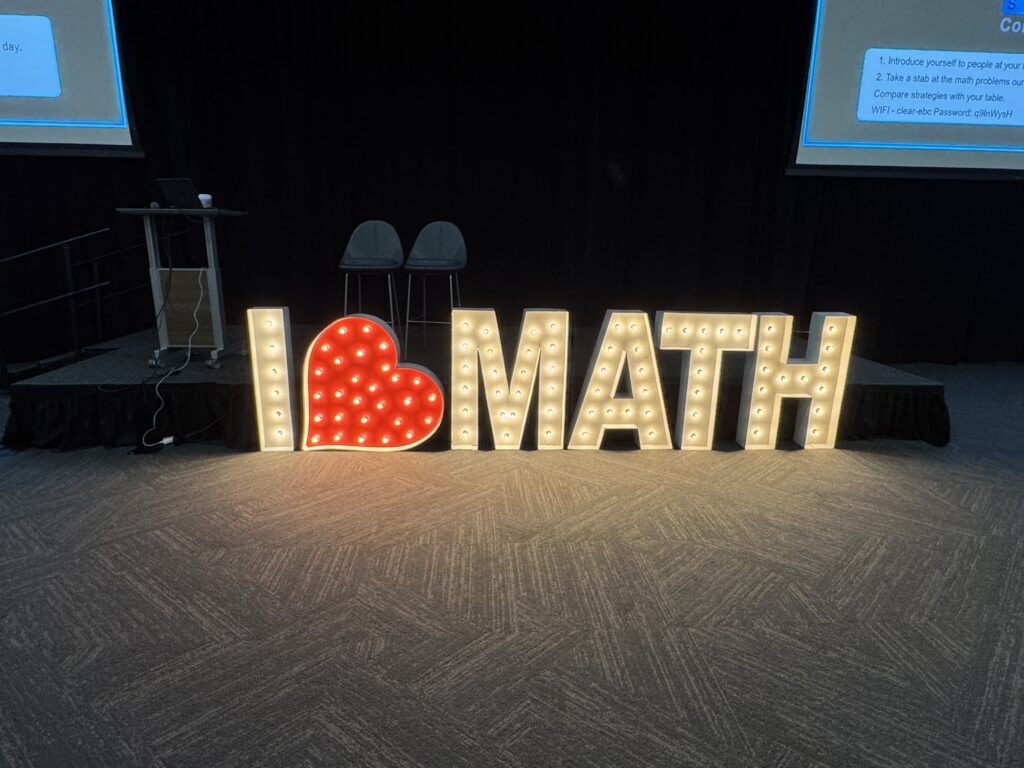
One hundred and sixty-five educators, community advocates, researchers, philanthropists, and officials recently gathered in Kansas City, Missouri, to explore how math skills can form and advance careers. To kickstart the event, they rolled their sleeves up and played some games.
- An elementary teacher raced to answer trivia questions faster than a math coach who spends her days helping teachers sharpen their instruction.
- A regional philanthropic program officer went head-to-head with the leader of an after-school network in a rapid mental math competition.
- A school board member, two high school teachers, and a children’s book author circled a table for a round of Uno that, as many a household could surely attest, got rowdy.
These early moments served as a quiet rebuke to the belief that math is reserved for a select few—a belief that has shaped opportunity in Kansas City and nationwide.
This was not a team-building icebreaker. It was an opening argument.
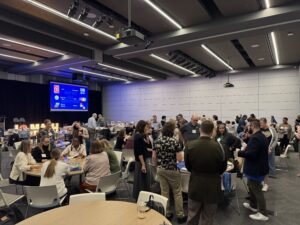
The Everyone Counts! Summit, hosted by the Kansas City STEM Alliance, opened with games to show math is not exclusive to prodigies and specialists. Numeracy is something that is built over time, often without individuals knowing they’re doing it. Before a single slide was shown or a single data point presented, the room of more than 150 education leaders embodied the Summit’s central premise — that math is everywhere, and for everyone.
Changing existing belief structures about math is essential.
The Summit challenged the deeply ingrained notion that only some people are born “math people,” a story that tracks closely with race and income and that forecloses opportunity long before a student ever encounters algebra. The room spent time with data showing where Kansas City students are struggling and where there are genuine bright spots, but the data served a larger purpose: to make the case that outcomes are not destiny, and that deliberate, coordinated action can change them.
If you’re a person, you’re a math person.
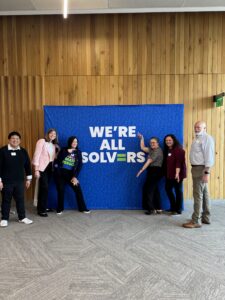
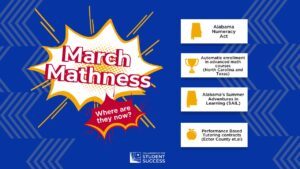
The Collaborative for Student Success’ “We’re All Solvers” campaign joined the Summit to share how beloved board and card games can build foundational numeracy skills and connect themes seen throughout Kansas City to a national picture — updating attendees on how states and districts across the country are advancing high-quality math instruction. The message was clear: Kansas City is not working in isolation.
Increasing numeracy skills takes a village.
The Summit’s power came not from any single session but from the extraordinary mix of people who chose to come together. Local and state school board members, content specialists, classroom educators, philanthropists, parents, and community advocates shared the same space — an uncommon level of cross sector alignment in education. Their presence rejected the idea that math achievement is solely a school-based issue and instead underscored how lasting progress emerges when families, policymakers, employers, and civic leaders pursue a shared goal.
That shared purpose was amplified by the setting: Oracle’s Innovation Campus, a reminder that math proficiency is not just an academic benchmark but an economic necessity. Kansas City’s growing economy depends on a workforce with strong quantitative skills, and the gap between current student achievement and future labor-market demands represents a competitiveness, civic, and equity challenge. The students most at risk of being left behind economically are the very students the region most needs to thrive. Other communities can learn from Kansas City’s approach: build a genuinely cross-sector coalition, ground decisions in local data, challenge limiting narratives, and make the economic case visible and tangible.
Everyone Counts! was a beginning, not a conclusion.
The coalition is assembled, the urgency is shared, and the work is clear. As a national movement to improve math achievement gains momentum, Kansas City has the talent, alignment, and resolve to help lead it—showing the country what becomes possible when a region decides that math success is everyone’s responsibility.